Quick Summary:
It’s the question that small business owners keep asking: Is spending money on paid search advertising worth it? Or is it just another drain on an already tight budget? You’re not alone if you’ve ever wondered whether these ads bring results or clicks with no action.
Continue to read on to discover the pros, cons, and must-knows before investing a single dollar.
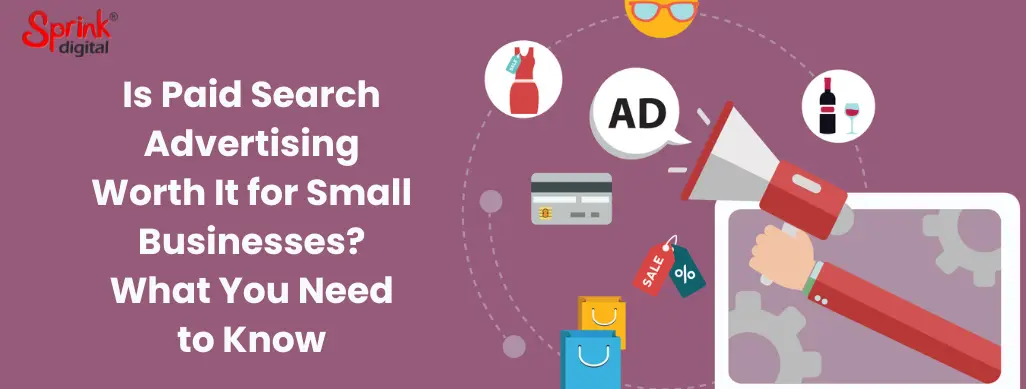
Simply put, paid search advertising means paying to appear at the top of the search engine results pages, usually through Google Ads or Bing Ads. Every time someone searches for a keyword relevant to your business, your ad could appear, depending on your bid and relevance.
Unlike organic search, paid search ads can provide maximum instant visibility, where ranking is earned with time via search engine optimisation.
For many small businesses, paid search advertising has been an effective means. Here’s why:
For most well-known benefits, paid search advertising is not a set-it-and-forget-it solution. The challenges are:
This is where a good digital consultant can make all the difference, helping you maximise your return without burning your budget.
Here are scenarios when paid search advertising makes real sense for small businesses:
Need to create buzz fast? Ads get the word out quicker than any other method.
If your niche is crowded, it’s one way to grab attention before your competitors do.
Running a limited-time offer? Ads help you capitalise before time runs out.
If your website is built to convert, the traffic you pay for is more likely to bring returns.
While it’s a great tool, paid search advertising isn’t always the best fit. You might want to reconsider if:
If you can’t afford even basic bidding levels, your ads won’t show.
Sending people to a slow, confusing, or outdated site is like throwing money away.
These ads need attention. You may not get value if you don’t have the time or resources.
With this checklist, you gain the ultimate paid search marketing spending tips:
Know precisely what you want: clicks, calls, or conversions.
Narrow your target market so you are not paying for irrelevant clicks.
Include split and A/B testing for your headlines, descriptions, and landing page.
Keep track of what happens after an ad click.
Keep adding those words you don’t want to be targeted to stretch your advertising dollars.
While a fine strategy may exist, most small and medium companies engage a web consultant to ensure proper setup and monitoring.
It doesn’t matter, per se, in isolation. It meets its match when:
So, is paid search advertising worth it? If it fits your goals and is set up with a plan, then yes. It drives leads, builds visibility, and scales with your business. But it’s not a magic bullet. Think strategy first; don’t be afraid to work with a digital consultant if you need a guide.
A: Many small businesses start with $500–$2,000 monthly to test and learn. It depends on your industry and goals.
A: Google Ads offers more reach, but Bing Ads often have lower competition and cheaper clicks. Try both to see what works.
A: Yes, but it helps to learn the basics first. Google offers helpful tutorials, and small budgets benefit from close monitoring.
A: You can get traffic within hours, but expect meaningful results after a few weeks of testing and refining your campaigns.
A: Broad keyword targeting, weak ad copy, ignoring mobile users, and not tracking results are frequent issues small businesses face.

Join our growing community and get inspiring articles.
Our highly trained talented teams are committed to providing you with top-level, technical or any other support 24*7.
Ready to get started? Give us a call.