Quick Summary:
“Why are we not growing on social media despite posting regularly?”
“Is it even possible to gain traction without spending on ads?”
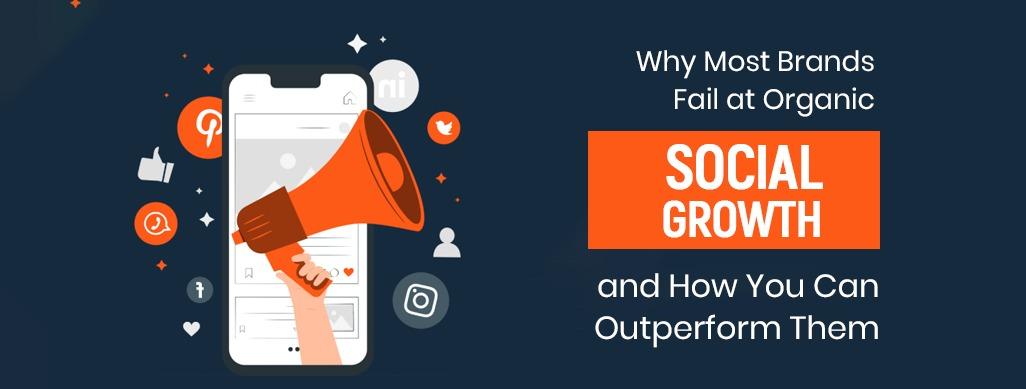
These are questions countless businesses are asking today. While bold content and consistent posting seem like enough, the reality is different. Most brands are getting lost in the noise, not because of a lack of effort, but because their approach lacks the edge needed in today’s digital world. Want to find out why and how to break through? Read on.
Organic growth in social media channels means reaching people for free without the help of promotions. It is about building genuine relationships, gaining followers who care, and keeping them engaged.
Momentum drives organic growth, as opposed to ad spending, whose promotion ends once its budget runs out. Hence, brands continue to value organic growth. It is just hard to get organic growth.
Brands fail because they treat social media services like a billboard when they should be a conversation.
To stand out organically, leading brands focus on value, authenticity, and community-building. Here’s how they flip the script:
Whether you’re just getting started or trying to fix a flatlining feed, these actions can set you on the right path:
Schedule posts across platforms based on engagement data.
Use polls, DMs, and insights to understand what they need or want.
Turn one blog post into multiple formats: video, infographic, carousel, and story.
Partner with micro-influencers or customers to tap into trust-based reach.
Reply, react, comment, and repost. Don’t broadcast; connect.
These reveal what your audience is saying about your niche, not just your brand.
Organic growth is key to building trust for e-commerce brands, especially. With the right e-commerce services and community-focused content, it’s possible to drive sales without relying solely on paid promotions.
In the world of e-commerce services, the power of peer influence is everything. Buyers check reviews, comments, and user tags before purchasing. A strong organic presence gives your brand social proof and authority.
Here’s how smart social media services complement e-commerce services:
This synergy between e-commerce and social engagement forms a sustainable loop, where visibility drives trust, and trust drives conversions.
Yes, brands that focus on value-based content and community building still experience consistent organic growth, even with algorithm changes.
At least 3–5 times a week is ideal. What matters more is consistency and relevance, not just volume.
Absolutely. Many small businesses win with authentic storytelling, active engagement, and targeted social media services.
Yes. Organic reach builds trust, showcases real product experiences, and supports long-term customer relationships, which are key to e-commerce services’ success.
Most brands don’t fail because they’re invisible. They fail because they’re forgettable. They treat social media services as a checkbox instead of a tool for connection, learning, and brand-building.
But with a clear plan, strong storytelling, and strategic use of e-commerce services, you can rise above the crowd. Organic growth isn’t just possible; it’s powerful, sustainable, and within your reach.

Join our growing community and get inspiring articles.
Our highly trained talented teams are committed to providing you with top-level, technical or any other support 24*7.
Ready to get started? Give us a call.